
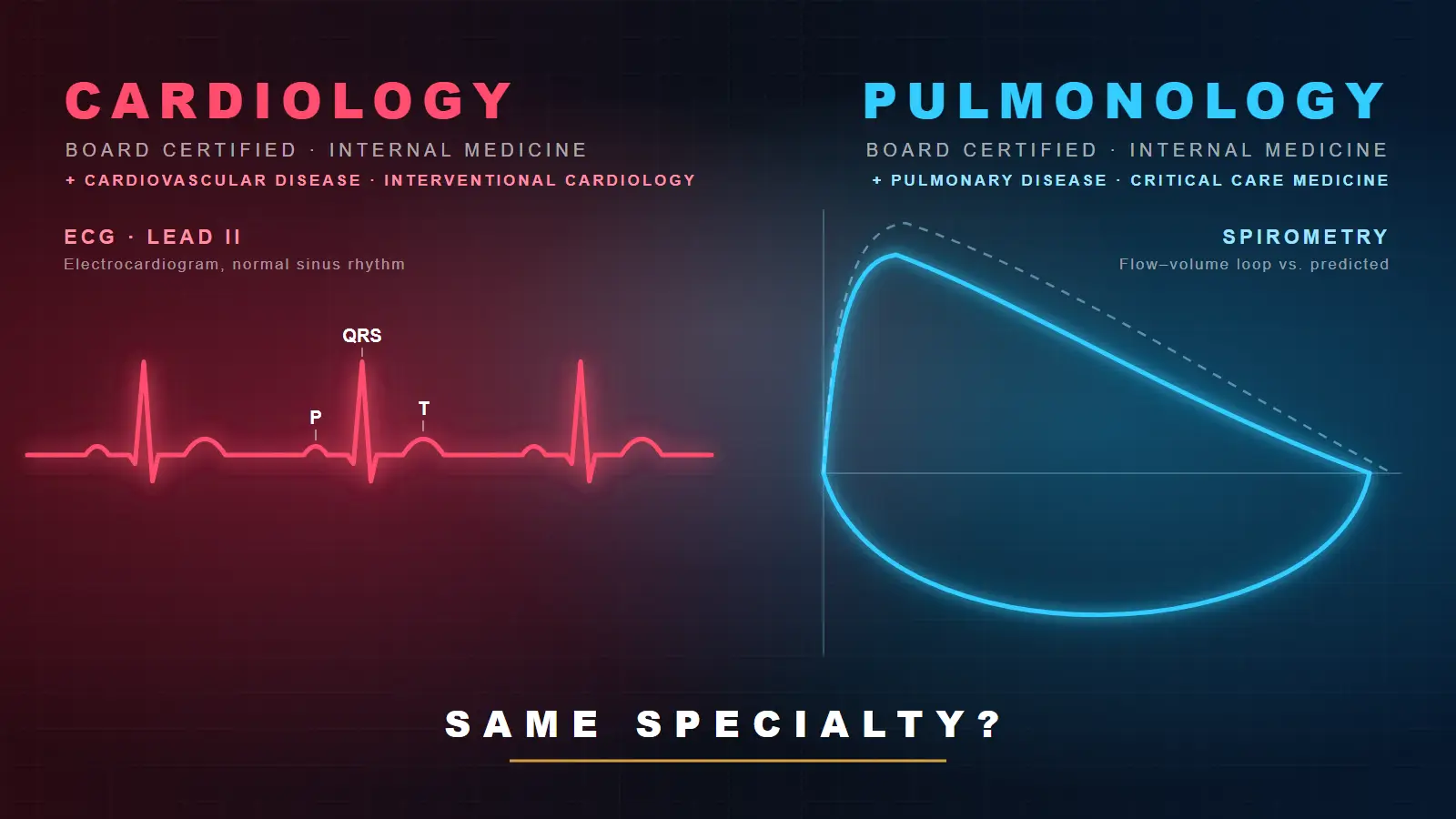
The lawsuit over the death of Derrick J. Williams never reached the question most people expect a malpractice case to answer, which is whether a doctor made a mistake. It turned instead on a narrower point of Florida law: could a board-certified cardiologist sign the expert affidavit needed to bring a claim against a pulmonologist? In September 2025, Florida’s Second District Court of Appeal said no, and it ordered the claims against the pulmonologist and his practice dismissed with prejudice.
How the Case Began
In May 2024, Kha’leya Williams, acting as personal representative of the Estate of Derrick J. Williams, filed a wrongful death suit in Sarasota County. The defendants included DeSoto Memorial Hospital, Sarasota Memorial Hospital, the Florida State University Board of Trustees, several individual physicians, and Dr. Ziad Walid Ghamra along with his practice, Lung Associates of Sarasota.
Florida does not allow a malpractice plaintiff to simply file a complaint. Under sections 766.106 and 766.203 of the Florida Statutes, a claimant must first investigate the claim, serve a notice of intent on each prospective defendant, and support the claim with a verified opinion from a qualified medical expert. Ms. Williams served her notice in June 2023. Attached was an affidavit from Dr. Joshua M. Willis, who is board certified in internal medicine, cardiovascular disease, and interventional cardiology. Dr. Willis concluded that Dr. Ghamra and three other physicians fell below the standard of care. His affidavit noted that both cardiology and pulmonary consultations were requested while Mr. Williams was at Sarasota Memorial Hospital, and it summarized the notes from the critical care pulmonology consult.
Dr. Ghamra is board certified in internal medicine, pulmonary disease, and critical care medicine. He had worked in pulmonary medicine and pulmonary critical care at Sarasota Memorial since December 2017, and he saw Mr. Williams as the consulting critical care pulmonologist. The appellate opinion does not describe the clinical course in detail, and no court has made any finding about whether any physician was negligent.
One procedural fact ended up being decisive. According to the opinion, Dr. Ghamra and his practice told the estate twice, before both the presuit period and the statute of limitations expired, that they considered the affidavit noncompliant with Florida law.
Two Readings of “Same Specialty”
Section 766.102(5)(a) provides that when the defendant is a specialist, the expert must specialize in the same specialty. The statute never defines the word “specialty.”
The estate argued that both physicians are internists, that internal medicine is the specialty, and that cardiology and pulmonology are subspecialties within it. In its view, sharing a specialty does not require sharing a subspecialty. It relied on materials from the American Board of Internal Medicine and the American Board of Emergency Medicine, and on Pradaxay v. Kendrick, a 2024 Sixth District decision that treated gynecology as the specialty and gynecologic oncology as a subspecialty within it. The estate also argued that presuit corroboration exists to show reasonable grounds for a claim, not to set an exacting bar at the courthouse door.
Dr. Ghamra framed the issue differently: does a practicing interventional cardiologist work in the same specialty as a critical care pulmonologist? He argued that the estate’s reading would let an internist evaluate the care of endocrinologists, gastroenterologists, oncologists, nephrologists, and many others. The trial judge sided with the estate, finding that both doctors shared internal medicine as their specialty and that pulmonology is a subspecialty of it.
What the Appeals Court Decided
Judge Black wrote the opinion, joined by Judges Northcutt and Kelly. Because the facts about each doctor’s credentials were undisputed, the panel reviewed the legal question fresh. It began with definitions from Stedman’s Medical Dictionary and the American Heritage Dictionary, but conceded that those definitions, standing alone, did not settle whether the relevant specialty was internal medicine or pulmonology. The court then gave three contextual reasons for choosing pulmonology.
First, the statute ties expert testimony to the prevailing standard of care for a given health care provider. Dr. Ghamra was the pulmonologist who responded to a pulmonary consult, so the standard of care at issue was that of pulmonology, and the expert had to come from that field.
Second, section 766.102(5) separates specialists from general practitioners and sets different criteria for each. The court noted that Stedman’s describes a generalist as including an internist. Treating internal medicine as the governing Second, section 766.102(5) separates specialists from general practitioners and sets different criteria for each. The court noted that Stedman’s describes a generalist as including an internist. Treating internal medicine as the governing specialty for a pulmonologist would blur a line the legislature drew deliberately.
Third, the court looked at legislative history. Before 2013, an expert could qualify by practicing a similar specialty that covered the medical condition at issue, and trial courts had express discretion over expert qualifications. A 2013 amendment removed both. The Florida Supreme Court, in University of Florida Board of Trustees v. Carmody (2023), described that change as eliminating a substantial basis for trial court discretion. The panel said courts may not restore language the legislature chose to delete. It acknowledged the supreme court’s instruction to read these statutes in a way that favors access to the courts, but, citing a 2024 Fifth District decision, concluded that narrowing the pool of qualified experts is not by itself an access problem.
The remedy followed from the timeline. Florida case law allows a defective expert opinion to be cured if the fix comes before the statute of limitations runs. Here the limitations period had expired, and the estate had been warned well before it did. The court reversed and sent the case back for dismissal with prejudice of the claims against Dr. Ghamra and Lung Associates.
Where the Case Fits
Florida courts have enforced the same specialty rule before. In Essex v. Karr, the Fifth District upheld the dismissal of a hip surgery case because opinions from an emergency physician, a radiologist, and a nurse could not support a claim against an orthopedic surgeon. In Clare v. Lynch (2017), the Second District found a podiatrist’s affidavit insufficient against an orthopedic surgeon. What sets the Williams case apart is that both physicians held the same base certification in internal medicine. The fight was over which layer of training counts.
The structure of medical certification supports both sides of that argument. The American Board of Internal Medicine began certifying internists in 1936 and added separate examinations in cardiovascular disease and pulmonary disease in 1941. The American College of Physicians explains that subspecialty fellowships typically add one to three years of training on top of a three-year internal medicine residency. The estate emphasized the shared foundation; the court emphasized the separate fields of practice built on it.
Other states handle the question differently. Michigan requires an expert to have devoted most of their professional time to the defendant’s specialty, and its courts apply a test that identifies a single most relevant specialty. New York, by contrast, has held that a plaintiff’s expert need not practice in the same specialty as the defendant if the expert has the necessary training and experience.
The policy debate is real on both sides. Physician and hospital groups that filed briefs in Carmody argued that only a peer in the same field can fairly judge whether a specialist met the standard of care, and that strict matching filters out weak claims. Critics respond that the rule increases the cost of bringing a case and can end claims on technical grounds before anyone examines the underlying care. The Williams case shows both effects at once: the court applied the statute as written, and the claims against the pulmonologist ended without any finding about the treatment Mr. Williams received.
What It Means Going Forward
For attorneys handling Florida claims, the decision suggests that matching board certifications is not enough. Courts in the Second District may look at the capacity in which a physician treated the patient, such as the consult service they answered, when deciding which specialty applies. Responding to a deficiency notice while the limitations period is still open also proved to be critical. For physicians, the ruling indicates that a court will likely measure their care against peers who practice the same specialty they were exercising at the bedside. The appeal addressed only Dr. Ghamra and his practice, and the opinion does not resolve the claims against the remaining defendants.
Sources
- Ghamra v. Williams, No. 2D2024-2585 (Fla. 2d DCA Sept. 5, 2025), FindLaw: https://caselaw.findlaw.com/court/fl-district-court-of-appeal/117677028.html
- News Service of Florida, “Specialty sinks med-mal case”: https://www.newsserviceflorida.com/latest/briefs/specialty-sinks-med-mal-case/article_b7f4863d-9512-40f3-92e7-beb444363aa8.html
- Florida Statutes section 766.102, The Florida Senate: https://m.flsenate.gov/Statutes/766.102
- “Revisiting an Old Friend: New Developments in Same Specialty” (Nov./Dec. 2025): https://mydigitalpublication.com/article/Medical+Malpractice/5072960/856941/article.html
- WFSU Gavel to Gavel, University of Florida Board of Trustees v. Carmody, SC22-68: https://wfsu.org/gavel2gavel/viewcase.php?eid=2841
- WUSF Health News, Essex v. Karr: https://health.wusf.usf.edu/post/medical-malpractice-case-rejected-expert-issue
- Clare v. Lynch, 220 So. 3d 1258 (Fla. 2d DCA 2017): https://www.syfert.com/florida/cases/220-so-3d-1258/michael-clare-md-v-lynch
- American Board of Internal Medicine, Exam Administration History: https://www.abim.org/about/abim-exams/exam-administration-history/
- American College of Physicians, Subspecialties of Internal Medicine: https://www.acponline.org/node/151675
- American Medical Association, “Expert witnesses must practice same specialty as defendant physicians”: https://www.ama-assn.org/practice-management/sustainability/expert-witnesses-must-practice-same-specialty-defendant
- Sanchez v. VanRiper, 2023 NY Slip Op 03098: https://nycourts.gov/reporter/3dseries/2023/2023_03098.htm